CASE STUDY · ONEAI
AI · VOICE · ACQUIREDFive years together.All the way to acquisition.
From a language AI platform, through chat agents, to voice AI — and an acquisition by monday.com.
OneAI is a conversational AI platform that developed advanced language intelligence, AI agents and autonomous voice technology for businesses. For five years we worked alongside the team as a long-term technology partner — from developer APIs, through intelligent chat agents, to a voice AI system managing real-time business conversations.
The journey reached a major milestone in 2026, when OneAI was acquired by monday.com to add voice agent capabilities to its expanding AI platform.
- partnership
- 5
- Years of building together
- product eras
- 3
- Language AI · Chat · Voice
- milestone
- 2026
- Acquired by monday.com
- channels
- VOICE
- Phone · SMS · Chat
01 / About OneAI
Making advanced AIsomething businesses can run.
OneAI was created to make advanced artificial intelligence and natural language capabilities accessible to businesses and developers. Initially the platform provided language AI through APIs — analyzing content, identifying meaningful information and turning natural language into structured data. As generative AI evolved, the product expanded into chat agents and later a complete voice AI platform.
- Early years
Language AI · APIs
Language analysis turning free text into structured data, for developers and products.
- The GenAI era
Chat agents
Agents communicating directly with users, grounded in company knowledge and systems.
- The current era
Voice AI
Voice agents running inbound and outbound conversations with real customers.
- 2026
Acquired · monday.com
The technology and team join monday.com's AI platform.
02 / A long-term partnership
Not a project.A partnership.
For five years we operated as an ongoing technology partner inside a fast-moving startup, where the product, market and technology continuously evolved. Rather than acting as an external vendor around an isolated task, we became an integral part of the product-building process. That required us to:
- Develop a deep understanding of the product and business vision.
- Work closely with leadership, product and engineering teams.
- Adapt the platform to rapid changes in the AI industry.
- Design capabilities that could scale over time.
- Support multiple versions and product directions.
- Continuously improve the user experience.
- Connect complex AI infrastructure with intuitive interfaces.
- Maintain the pace a growing startup demands.
03 / The challenge
Ten technology layers.One simple product.
The central challenge was turning highly complex AI technology into a product businesses could configure, operate and manage simply. The platform had to connect:
- NLP and AI models
- Business content and knowledge
- Conversation design
- AI agents
- Telephony infrastructure
- Real-time voice interactions
- CRM and calendar systems
- Transcripts and recordings
- Analytics and optimization
- Developer APIs
All of it in one of the fastest-changing areas of technology — without sacrificing stability or overwhelming users.
04 / The solution
From AI capability —to a clear business workflow.
Throughout the partnership we supported a product experience that transforms advanced AI capabilities into business workflows. The platform was structured around a repeatable process:
- Define the agent's business objective
- Connect relevant knowledge and business systems
- Design the conversation flow
- Configure how the agent responds and acts
- Deploy the process with real customers
- Collect conversation data and outcomes
- Analyze performance
- Continuously improve
Business teams operate sophisticated AI systems — without managing the infrastructure behind them.
05 / From language AI to agents
First understand language.Then take action.
OneAI's earlier products focused on turning natural language into structured, useful information — through APIs. That infrastructure became the foundation for agents that don't just analyze information, but interact and act:
- Content summarization
- Topic & keyword detection
- Information extraction
- Content classification
- Language analysis
- Document processing
- Unstructured language → structured data
- Embedding AI in existing products
06 / The evolution to conversational AI
From AI behind the scenes —to an agent talking to customers.
Instead of operating only behind the scenes, businesses could create an agent that communicates directly with users, understands their requests and responds using the organization's content and systems. The design challenge: meaningful control without a complicated technical tool.
- Natural conversations
- Context preservation
- Access to current business information
- Configurable goals and rules
- Controlled responses
- Reduced hallucination risk
- Multilingual experiences
- Data transfer to external systems
07 / The voice AI platform
Agents that pick up the phone.And make the call.
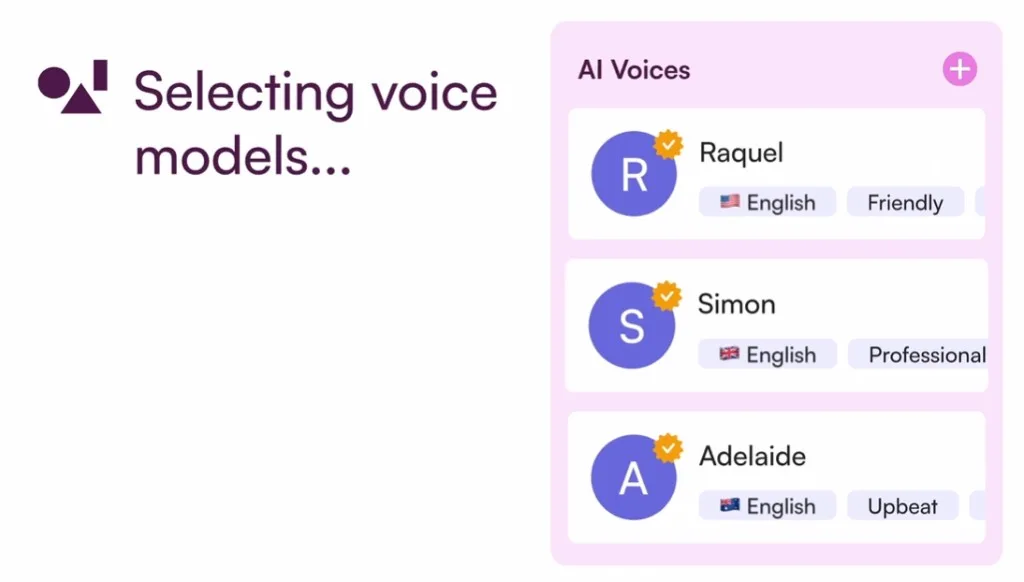
OneAI later evolved into a complete AI voice agent platform: inbound and outbound calls, lead qualification, appointment scheduling, follow-ups and human transfers — plus campaign management, call timing, transcripts and recordings.
- Inbound and outbound phone calls
- Rapid follow-up with new leads
- Lead verification and qualification
- Real-time appointment scheduling
- Meeting confirmation and reminders
- Automated follow-up calls
- Phone, SMS and chat communication
- Warm transfers to human reps
- Voicemail and IVR handling
- Continuous operation after hours
08 / Conversation flow design
AI intelligence.Business rules.
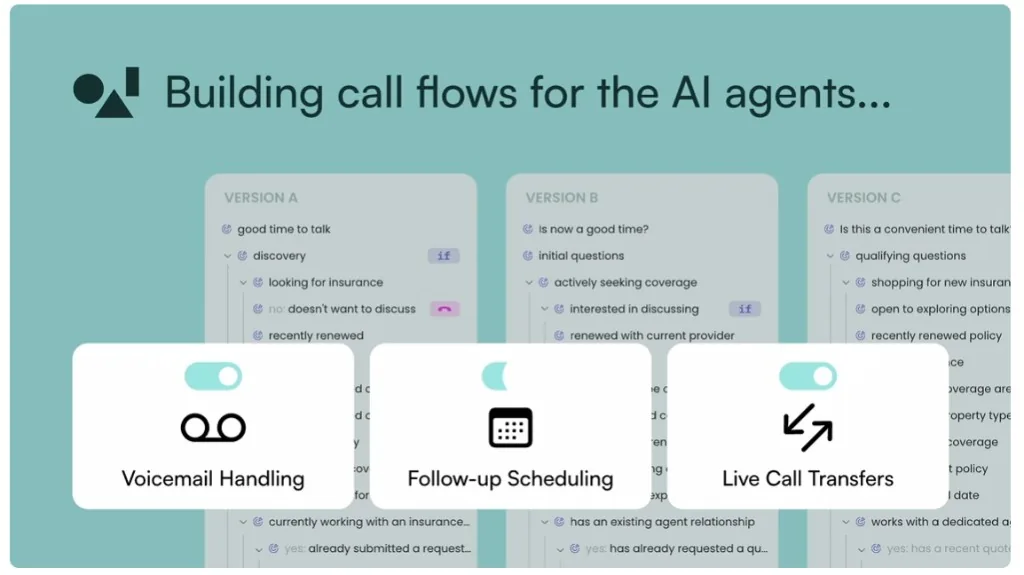
Rather than relying on a completely unrestricted model, businesses build structured flows that control messaging, process and customer experience. A flow can define:
- How the call begins
- Which questions the agent asks
- What information to collect
- How to respond to different answers
- When to schedule a meeting
- When to transfer the call
- What happens with no answer
- How objections are handled
- What counts as success
09 / Intelligent human handoffs
The rep joins the call.Already knowing everything.
When the AI identifies a qualified lead or a situation requiring human attention, it transfers the live conversation to the relevant rep — with a briefing of the call so far. The rep joins already knowing:
- Who the customer is
- What they're looking for
- Which questions were asked
- How the customer responded
- Whether they meet the qualification criteria
- What should happen next
The result: a smooth transition between automated conversations and human teams.
10 / Analytics and optimization
Every call measured.Every version tested.
A successful voice interaction is measured by more than whether a call took place. The platform collects data that drives continuous improvement — including A/B and multivariate testing across scripts, sequences and voices:
- Contact and answer rates
- Lead qualification rates
- Human handoff rates
- Conversation outcomes
- Transcripts and recordings
- Script comparisons
- Voice and accent testing
- Call-time optimization
- Audience and segment analysis
- Conversion attribution
- Operational reporting
11 / Integrations and API
Part of the business stack.Not an isolated app.
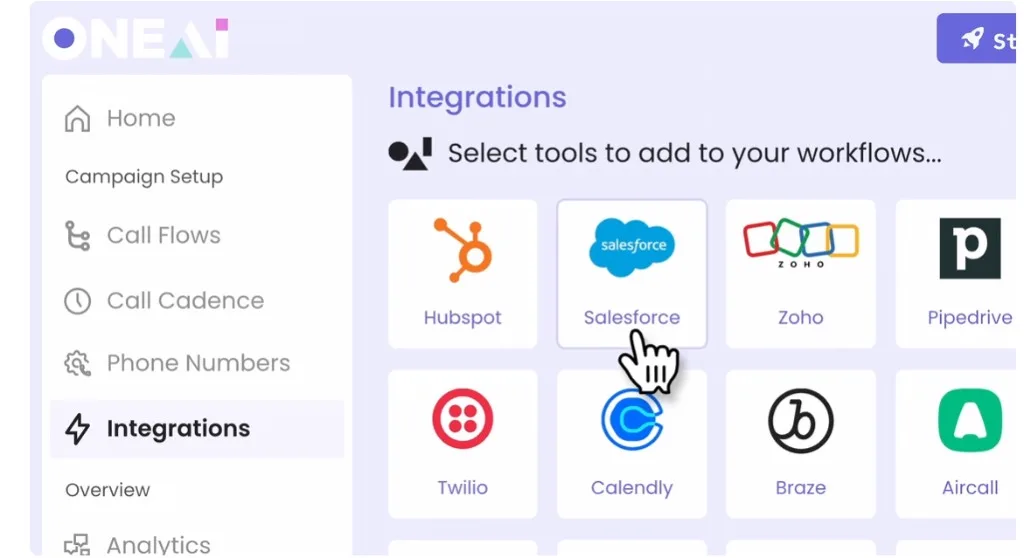
Agents read relevant information before a conversation and update connected systems in real time with the outcomes. The platform connects to CRMs, calendars, telephony, messaging, advertising and lead management — and provides API access for embedding its capabilities into custom products.
- CRM platforms
- Scheduling systems
- Calendars
- Telephony providers
- Messaging tools
- Advertising platforms
- Lead management
- Internal services
12 / UX for a complex AI product
Two audiences.One product.
The most important challenge was translating deep technical capability into an experience users could understand and operate — accessible to non-technical teams without limiting the depth advanced customers need.
13 / Management and operations
From an AI engine —to a daily operating platform.
Alongside the AI engines, the platform includes interfaces that turn the technology into a daily tool for sales, support and operations teams:
- Creating agents
- Managing conversation flows
- Uploading contacts and leads
- Launching campaigns
- Defining calling schedules
- Monitoring conversations
- Reviewing outcomes
- Reading transcripts
- Listening to recordings
- Managing integrations
- Tracking performance
- Improving scripts and workflows
14 / A rapidly changing industry
AI changed end to end.The product stayed stable.
During our five-year partnership, the AI landscape moved from NLP models, through generative AI, to autonomous agents managing real-time voice conversations. The long-term partnership enabled us to:
- Maintain continuity and deep product knowledge.
- Adapt the platform to new technologies.
- Improve existing systems without rebuilding everything.
- Rapidly develop new product directions.
- Preserve consistency across the user experience.
- Support the company throughout growth and transformation.
15 / Acquired by monday.com
May 2026:OneAI is acquired by monday.com.
monday.com announced its acquisition of OneAI as part of the expansion of its AI platform — adding voice agent capabilities and extending its AI Work Platform across additional surfaces where business work takes place. The team and technology joined monday.com, with the voice AI foundation continuing to evolve as part of a larger ecosystem.
16 / The outcome
From a language API —to an acquired company.
OneAI evolved from a language AI API platform into an advanced voice agent system that manages business conversations, connects with organizational systems and improves based on real-world outcomes. Across five years we supported the product's evolution, its changing technology and the company's growth stages.
The acquisition by monday.com marked a major milestone for the company, its team and the technology built over the years.
17 / Technology & capabilities
What's under the hood
Every layer was built for a fast-changing industry: modular, measurable, and ready for the next technology wave.
Stack
- Voice AI
- Conversational AI
- Language AI
- AI Agents
- Call Flows
- Warm Handoffs
- A/B Testing
- CRM Integrations
- Transcripts
- Campaigns
- APIs
- Acquired by monday.com
Got a similar idea?
From a first idea,through growth — to acquisition.
We work with startups not only to launch a first product, but to build, improve and scale it throughout every stage of the company. We become part of the product and technology team. Let's build your next company.
Five years. Three product eras. One exit.
Related services and reading
- ServiceAI and automation for business processesThe same kind of work in an operational context: identifying expensive manual processes and building a system that runs them end to end.
- ServiceAI integration for productsThe service behind OneAI: turning models, agents and complex AI infrastructure into a product businesses run on their own.
- ServiceDev team for startupsThe model behind the five years: a product and technology team that stays with the startup from first version to exit.
- GuideHow to run an AI pilot before committing to a productFit, scope, failure testing and what production requires — the method behind our AI integrations.